Yu-Gi-Oh!Real or fake
How to Tell a Yu-Gi-Oh! Card's Rarity and Edition
Read a Yu-Gi-Oh! card's rarity from its foil: name, art and borders. Plus what the gold or silver security foil says about First and Unlimited Editions.
We earn from qualifying purchases through links on this page. How we make money.

At a glance
- Common
- No foil at all
- Rare
- Silver foil name, plain art
- Gold security foil
- First Edition or Limited Edition
- Silver security foil
- Unlimited Edition (a reprint)
Look at where the foil sits. Konami’s guide says a Common has no foil, a Rare has a silver foil name, a Super Rare has a holographic picture with a plain name, and an Ultra Rare has both. Then check the small security foil in the bottom right corner: gold means First or Limited Edition, silver means an Unlimited reprint.
All of the descriptions on this page come from Konami’s “New to Yu-Gi-Oh!” guide. It is worth knowing them before you trade or buy single cards, because the same card can be printed at several rarities.
The rarity ladder, by foil
The table follows the order Konami lists the rarities in.
| Rarity | Card name | Picture and card |
|---|---|---|
| Common | Plain | No foil anywhere |
| Rare | Embossed silver foil | No foil on the picture |
| Super Rare | Plain | Holographic finish on the picture |
| Ultra Rare | Gold or colorful foil | Holographic finish on the picture |
| Premium Gold Rare | Gold | Gold foil on all borders and stars, holographic picture |
| Ultimate Rare | Gold foil | Embossed foil on the picture, border and other parts |
| Secret Rare | Rainbow-colored foil | Sparkling holographic picture |
| Prismatic Secret Rare | Rainbow-colored foil | Vertical and horizontal foil finish |
| Collector’s Rare | Rainbow designs | Embossing across the whole card |
| Starlight Rare | Rainbow-colored foil | Rainbow foil across the picture and all borders |
| Ghost Rare | Rainbow-colored foil | A three-dimensional hologram picture |
Konami also mentions a Pharaoh’s Rare version of the Ultra Rare, with Egyptian hieroglyphs over the picture’s foil.
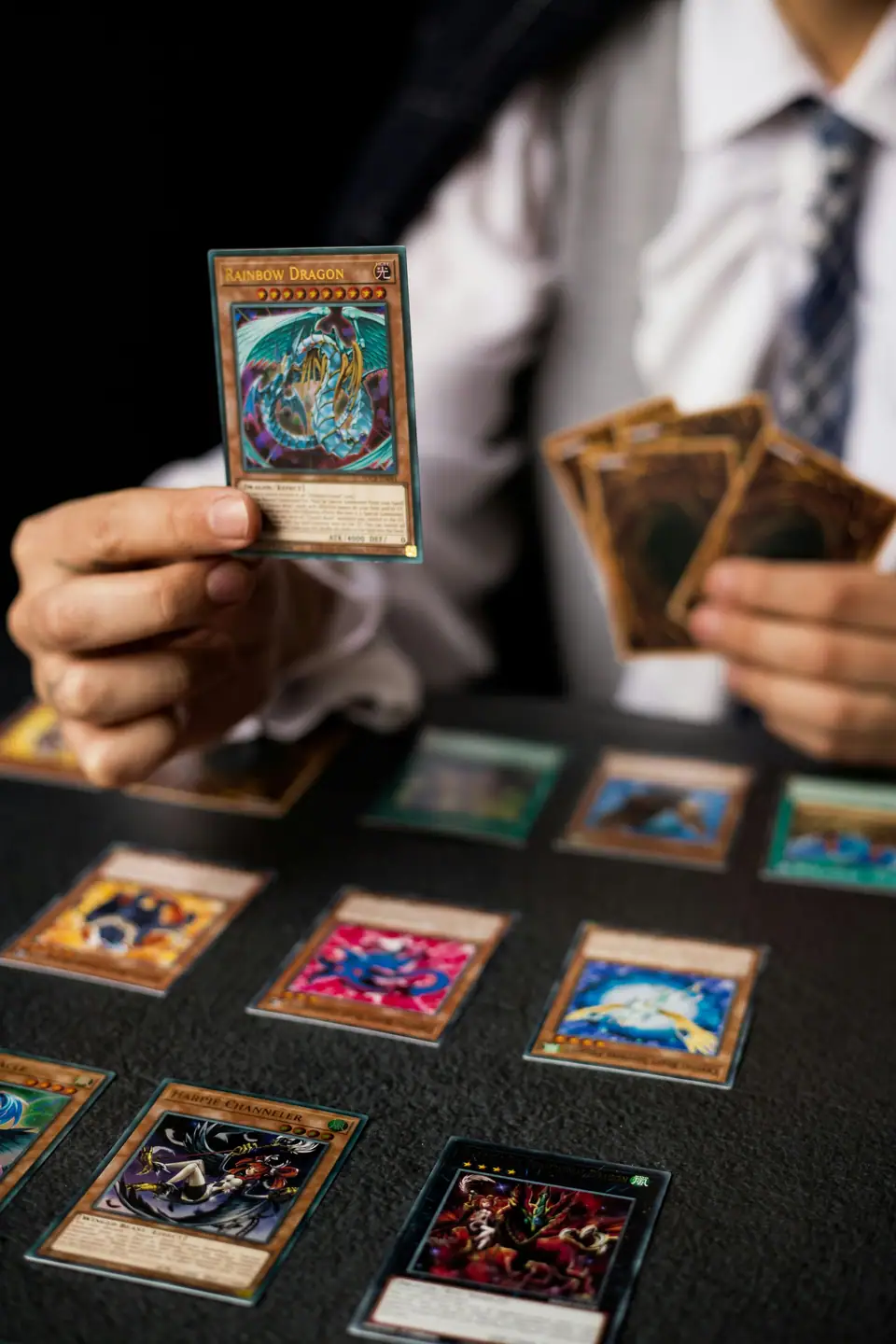
Check the corners: password and security foil
Konami says many cards carry a numerical password in the bottom left corner and a security foil in the bottom right. The security foil shows the Millennium Eye and the text YU-GI-OH!.
The color of that foil tells you the edition:
- Gold: First Edition (the first printing) or Limited Edition cards.
- Silver: Unlimited Edition cards, printed when a product is reprinted.
Good to know
A card with no security foil is not automatically fake: Konami says “many” cards carry it, not all. Compare a doubtful card with one from the same set that you know is genuine, and check the foil on the name and picture against the table above.
Rarity and edition are two different things
Rarity tells you how the card is finished: plain, silver name, holographic picture and so on. Edition tells you which printing it came from: First Edition (or a Limited Edition) with a gold security foil, or an Unlimited reprint with a silver one. A single card has both. A Rare can be First Edition or Unlimited, and so can a Secret Rare.
Checking a single card before you buy it
Listings for single cards usually name the rarity and the edition. Before you pay, compare the photos with the listing:
- Does the foil match the rarity? A listing that says Ultra Rare should show a gold or colorful foil name and a holographic picture.
- Does the security foil match the edition? “1st Edition” should go with a gold security foil in the bottom right corner, and an Unlimited card with silver.
- Is the set right? The same card can appear in several sets at different rarities, so check that the set named in the listing actually printed it at that rarity.
A photo that hides the corners or the name is a reason to ask for more photos before you buy.
Rarity depends on the set
Konami notes that booster packs come in many configurations, so not every set includes every rarity. Before you open packs looking for a particular finish, read the set’s product page on the official site to see which rarities it contains.
Sealed Yu-Gi-Oh! booster boxes
Live listings, shown by eBay
Opens eBay in a new tab. Check condition, seller feedback and returns.
Keep the foil safe
Foil cards scratch, and the rulebook says sleeves in a deck must all match so your cards are not marked. Sleeve foil cards before you play with them, and keep your best ones in a toploader or a 9-pocket trading card binder. If you are still choosing a first deck, our comparison of Structure Decks and Starter Decks explains what each one contains. Yu-Gi-Oh! cards need small sleeves; see card sleeve sizes.
Frequently asked questions
How can you tell the rarity of a Yu-Gi-Oh! card?
Look at where the foil is. Konami's guide says Commons have no foil, Rares have a silver foil name, Super Rares have a holographic picture with a plain name, and Ultra Rares have a gold or colorful foil name and a holographic picture. Higher rarities add foil to the borders or the whole card.
What does the gold sticker on a Yu-Gi-Oh! card mean?
It is the security foil in the bottom right corner. Konami says it is gold on First Edition (first printing) and Limited Edition cards, and silver on Unlimited Edition cards from reprints.
Is a Secret Rare rarer than an Ultra Rare?
Konami lists Secret Rare after Ultra Rare in its rarity list. A Secret Rare has a rainbow-colored foil name and a sparkling holographic picture, while an Ultra Rare has a gold or colorful foil name. Which rarities appear depends on the set, so check the set list.
Does every booster pack have every rarity?
No. Konami says booster packs come in many configurations and advises checking each set's information to see which rarities it includes.
Sources
Filed under Yu-Gi-Oh!
Read next
Yu-Gi-Oh! Structure Deck vs Starter Deck: Which to Buy First
Yu-Gi-Oh! Starter Decks are built for new Duelists; Structure Decks for players who know the rules. What each contains, and which one to buy first.
How to Protect Trading Cards: Sleeves, Toploaders, Binders, Boxes
How to protect trading cards: sleeves for play, toploaders for valuable cards, binders for display, boxes for bulk, and the room conditions to store them in.
Which Trading Card Game Should You Start? Seven Games Compared
Pokemon, Yu-Gi-Oh!, Disney Lorcana, One Piece, Flesh and Blood, Star Wars: Unlimited and Digimon compared: deck sizes, starter products and how each game plays.
Card Sleeve Sizes: Which Sleeves Fit Pokemon, Yu-Gi-Oh! and Lorcana
Standard sleeves (about 66 x 91 mm) fit Pokemon, Lorcana and Flesh and Blood cards; Yu-Gi-Oh! needs Japanese-size sleeves. Sizes, thickness, double sleeving.